
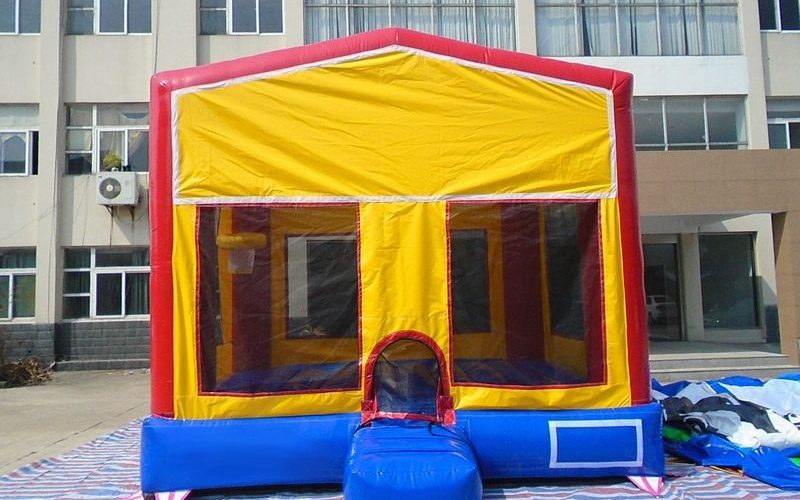
Many first-time customers assume that setting up a bouncy castle is a complicated process that requires special equipment or technical knowledge.
One of the most common questions people ask before renting or purchasing an inflatable is:
How long does it actually take to set up a bouncy castle?
The good news is that most modern commercial bouncy castles are designed for quick and straightforward installation. In many cases, setup can be completed much faster than people expect.
Choosing the Right Location
Before unpacking the inflatable, the first step is selecting a suitable setup area.
A good location should be:
- Flat and level
- Free from sharp objects
- Large enough for the inflatable and safety clearance
- Close to a suitable power source
Spending a few minutes preparing the area beforehand can significantly speed up the entire setup process.
Unrolling the Inflatable
Once the location is ready, the inflatable can be removed from its storage bag and carefully unrolled.
At this stage, operators usually position the inflatable so that the entrance faces the desired direction and the blower connection remains easily accessible.
For most standard bouncy castles, this step only takes a few minutes.
Connecting the Blower
The blower is one of the most important components of the setup process.
After attaching the blower tube securely, the blower can be connected to a power source.
As air fills the inflatable, the structure gradually rises and takes shape. Most commercial bouncy castles become fully inflated within just a few minutes.
For many first-time users, this is often the quickest part of the entire process.
Securing the Inflatable
Proper anchoring is essential for safe operation.
Commercial bouncy castles should always be secured according to the manufacturer’s guidelines.
Depending on the setup location, operators may use:
- Ground stakes
- Sandbags
- Ballast systems
Although anchoring requires some additional time, it is one of the most important steps in the setup process.
Performing a Safety Check
Before allowing participants to enter the inflatable, a final inspection should always be completed.
A basic safety check may include:
- Confirming anchor points are secure
- Checking the blower connection
- Ensuring the inflatable is fully inflated
- Inspecting entrances and exits
- Removing any nearby hazards
These checks only take a few minutes and help ensure a safe and enjoyable experience.
So, How Long Does Setup Usually Take?
The exact setup time depends on the size and type of inflatable.
However, many standard commercial bouncy castles can often be fully installed in less than 30 minutes once the location has been prepared.
Larger inflatables, obstacle courses, and inflatable parks may require additional setup time and extra personnel.
What About Packing It Away?
Deflating and packing away a bouncy castle is usually just as straightforward.
Once the blower is turned off, the inflatable gradually deflates and can then be folded, rolled, and stored for future use.
With a little experience, many operators find that packing away the inflatable is even faster than setting it up.
Designed for Convenience
Modern commercial inflatables are designed to be practical as well as fun.
Many professional operators prefer equipment that can be transported easily, installed efficiently, and maintained with minimal effort.
This combination of convenience and reliability is one reason bouncy castles continue to be popular for parties, schools, community events, and rental businesses.
Final Thoughts
Setting up a bouncy castle is often much quicker and easier than many people expect.
With a suitable location, proper anchoring, and a few simple safety checks, most commercial inflatables can be ready for use in a relatively short amount of time.
For many standard units, the entire process can often be completed in less than 30 minutes, making bouncy castles a practical and convenient entertainment option for a wide range of events.